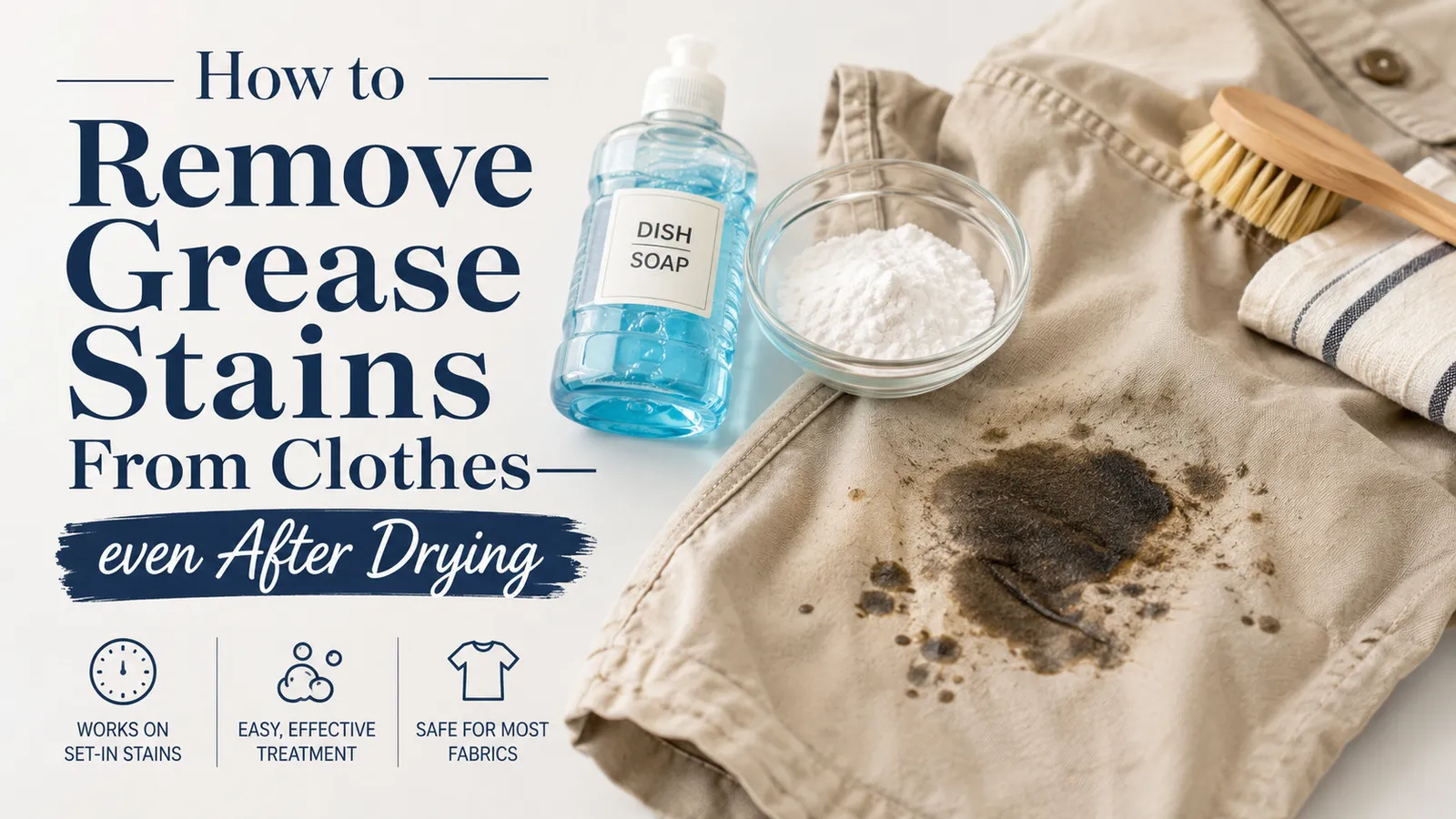
How to Remove Grease Stains From Clothes—even After Drying
Remove fresh, dried, and dryer-set grease stains from clothes using absorbent powder, liquid detergent, careful washing, and repeat treatment.
Written by
EverydayFixes Editorial Team
In This Guide
Fast Solution
Quick Answer
Lift away solid grease with a dull spoon and blot liquid oil with a white cloth without rubbing. For a fresh stain, apply an absorbent powder when appropriate, remove it, then pretreat the fabric with liquid laundry detergent or a small amount of plain dishwashing liquid that is safe for the garment.
Rinse dish soap out thoroughly before machine washing, wash at the warmest temperature allowed by the care label, and air-dry the garment before inspection. A dried or dryer-set stain often needs the same process repeated rather than one stronger treatment.
Do not use gasoline, lighter fluid, paint thinner, automotive degreaser, or an unlabeled solvent on clothing. Keep oily garments out of the dryer until they have been thoroughly washed and no oily residue or odor remains.
Time Required
30–90 minutes plus washing and drying
Difficulty
Medium
Best For
Cooking oil, food grease, butter, cosmetics, and light machine oil
Important
Rubbing, gasoline, unknown solvents, and dryer heat before inspection
Understand the issue
Why Grease Stains Remain After Washing
Grease and oil repel water, so a normal wash may not reach and suspend the oily material effectively without pretreatment. Oil also spreads through fibers and may look almost invisible while wet, only to reappear as a dark translucent patch after drying.
A safe method removes excess grease first, uses a surfactant-containing pretreatment to loosen the oil, washes at the warmest fabric-safe temperature, and avoids dryer heat until the mark is gone. Heavy petroleum, fuel, industrial chemicals, and contaminated workwear require more caution than ordinary cooking oil.
The oil was pushed deeper into the fabric
Rubbing spreads grease and drives it through multiple layers of fibers, creating a wider translucent area.
The stain was washed without pretreatment
Water and regular detergent in a crowded load may not have enough direct contact time to break up concentrated oil.
The garment was tumble-dried
Dryer heat can make an oily mark more difficult to remove and may also create a safety concern when combustible oily residue remains.
Too much pretreatment was applied
A large amount of dish soap, detergent, or stain remover may leave its own residue or create excessive suds in the washing machine.
The stain includes pigment or food residue
Sauce, curry, makeup, motor grease, and butter may contain oil plus dye, protein, or solid particles. Removing the oil may reveal a second colored stain.
The fabric holds oil strongly
Polyester and some synthetic fibers can retain oily soil, particularly in close-fitting clothing, activewear, and work uniforms.
Prepare first
What You Will Need
Gather these items before starting.
Dull spoon, card, or blunt edge
Use it to lift solid grease without cutting, scraping, or stretching the fabric.
White absorbent cloths or paper towels
Useful for blotting liquid oil and observing whether grease is still transferring.
Absorbent powder
Cornstarch or baking soda may absorb some fresh surface oil on compatible dry fabrics before wet treatment.
Liquid laundry detergent
A heavy-duty liquid detergent can provide direct surfactant contact with the grease before washing.
Optional plain dishwashing liquid
A small amount may help loosen food grease, but it must be patch-tested and thoroughly rinsed before machine washing.
Soft laundry brush
Use light pressure to distribute pretreatment on durable fabric without spreading the stain.
Optional oxygen stain remover
Useful for compatible washable fabric when colored food residue remains after the oil is removed.
Safety and care
Before You Start
Read the garment label before pretreating, soaking, increasing temperature, or using an oxygen product.
Do not use gasoline, lighter fluid, paint thinner, turpentine, automotive degreaser, or an unknown solvent on clothing.
Do not place an oily garment in a tumble dryer until it has been thoroughly washed and no oily residue or strong petroleum odor remains.
Rinse dishwashing liquid thoroughly before machine washing because excessive dish soap can create too many suds.
Do not mix chlorine bleach with another cleaner.
Fuel, solvent, industrial oil, chemical contamination, or heavily saturated workwear may require professional or employer-approved handling.
Dry-clean-only, leather-trimmed, wool, silk, acetate, or structured garments should be treated according to professional guidance.
Main method
Step-by-Step Instructions
Follow every step in order for a safer and more reliable result.
Step 1
Check what caused the grease stain
Identify whether the stain came from cooking oil, butter, sauce, cosmetics, skin care, bicycle grease, engine oil, fuel, or an unknown substance.
Ordinary food oil can often be treated at home. Fuel, solvent, industrial oil, or unknown chemical contamination may create additional safety and disposal concerns.
Step 2
Lift solids and blot liquid grease
Use a dull spoon or card to lift butter, sauce, or thick grease from the surface. Work carefully so the grease is not pressed through the fabric.
Blot liquid oil with a white cloth or paper towel. Move to a clean area of the towel until very little additional oil transfers.
Step 3
Absorb fresh surface oil when appropriate
Lay the garment flat and cover the dry stain with cornstarch or baking soda. Leave it long enough to absorb surface oil, then brush or shake the powder away.
Repeat with fresh powder if it becomes visibly oily. Skip this step on wet fabric, delicate finishes, deep-colored suede-like material, or items whose care instructions prohibit powder treatment.
Step 4
Place an absorbent cloth behind the stain
Position a folded white cloth or paper towel behind the affected layer so loosened grease is not transferred to the back of the garment.
Keep the stained section separated from clean fabric while applying pretreatment.
Step 5
Pretreat with liquid laundry detergent
Apply enough liquid laundry detergent to cover the stain without flooding the surrounding fabric. Gently work it into durable fibers with fingers or a soft brush.
Allow the contact time shown on the detergent label. Do not let concentrated product dry completely on the garment.
Step 6
Use dish soap carefully for food grease
When the fabric and product permit it, apply a small drop of plain grease-cutting dishwashing liquid to cooking oil or butter. Work it gently into the stain.
Rinse the dish soap thoroughly by hand before the garment enters the washing machine. Do not use a large amount, dishwasher detergent, bleach-containing formula, or strongly colored product without testing.
Step 7
Wash at the warmest label-safe temperature
Wash the garment using the warmest temperature and cycle permitted by its care label. Use the correct measured laundry detergent dose and leave enough space in the drum for proper movement and rinsing.
Wash heavily oily workwear separately from lightly soiled clothing when appropriate.
Step 8
Air-dry and inspect both sides
Remove the garment from the washer and inspect the stain while damp, then allow it to air-dry. Look at the area under natural or bright white light.
Grease may temporarily disappear while fabric is wet. A remaining translucent shadow after air-drying means another treatment is needed.
Step 9
Repeat the process for dried or dryer-set grease
Reapply liquid detergent, allow the approved contact time, and wash again. For a set-in stain, a longer compatible soak or oxygen pretreatment may help with remaining food pigment.
Do not increase chemical strength without confirming that the fabric and dye can tolerate it. Several gentle cycles are safer than aggressive solvent use.
Choose the right method
Instructions by Material or Surface
Use the instructions that match your item.
Cotton and linen
Best for: Shirts, tablecloths, trousers, and washable kitchen textiles
Lift excess grease, pretreat with liquid detergent, and wash at the warmest label-safe temperature.
For food stains containing color, treat the grease first and reassess any remaining tomato, spice, or sauce pigment after air-drying.
Printed designs, elastic, and blended fibers may require a lower temperature than plain cotton.
Polyester and synthetic blends
Best for: Activewear, uniforms, dresses, and synthetic shirts
Pretreat both sides of the stain because synthetic fibers can retain oil. Use a detergent compatible with the fabric and avoid high dryer heat.
A second treatment is common because polyester may release grease gradually.
Denim and heavy workwear
Best for: Jeans, aprons, overalls, and durable cotton blends
Remove thick grease carefully, apply liquid detergent, and use a soft brush on durable fabric. Wash separately when the garment is heavily soiled.
Check pockets, seams, cuffs, and layered areas for hidden oil before drying.
Workwear contaminated with fuel, solvent, or industrial chemicals should follow workplace safety and laundering rules.
Wool and silk
Best for: Delicate protein-based fibers
Blot excess grease and use only a fiber-safe product permitted by the care label. Avoid ordinary enzyme detergent, strong dish soap, hot water, and aggressive agitation.
Professional cleaning is usually safer for visible oil stains on valuable wool or silk.
Dry-clean-only and structured garments
Best for: Suits, coats, lined clothing, and tailored pieces
Blot excess oil, avoid water-based experimentation, and take the garment to a professional cleaner promptly.
Tell the cleaner exactly what caused the stain and whether any powder, detergent, or solvent has been applied.
More options
Alternative Methods
Use these options only when they suit the material.
Absorbent-powder treatment
Best for: Fresh surface oil on dry compatible fabric
Apply cornstarch or baking soda, let it absorb oil, remove it, and repeat before using liquid pretreatment.
Powder alone usually will not remove oil that has moved deep into the fibers.
Color-safe oxygen pretreatment
Best for: Compatible washable clothes with remaining food discoloration
Use after the oily portion has been treated. Patch-test the fabric and follow the exact dilution and contact time.
Do not mix the oxygen product with chlorine bleach or another cleaner.
Professional cleaning
Best for: Fuel, motor oil saturation, delicate fabric, or repeated failed treatment
A professional cleaner can identify whether a specialist solvent process is safe for the fiber, dye, lining, trim, and finish.
Inform the cleaner when the stain contains industrial oil, fuel, or another hazardous substance.
Protect your item
Common Mistakes to Avoid
Rubbing fresh oil across the fabric.
Washing grease without removing excess or pretreating.
Using a large amount of dish soap and placing it directly in the washer.
Using gasoline, lighter fluid, paint thinner, or automotive cleaner on clothing.
Drying the garment before checking whether the stain remains.
Assuming the mark is gone because it disappears while wet.
Treating food pigment before addressing the oily portion.
Using high heat on polyester, stretch fabric, or an unknown fiber.
Mixing chlorine bleach with another stain remover.
Optional tools
Helpful Products for This Fix
These product types are optional, not mandatory.
Heavy-duty liquid laundry detergent
Best for: Food grease and ordinary oily stains on washable clothes
Liquid detergent provides concentrated surfactant contact directly on the oil before the wash cycle.
Soft laundry stain brush
Best for: Durable cotton, denim, and workwear
A small soft brush distributes pretreatment without the harsh abrasion of a stiff household brush.
Color-safe oxygen stain remover
Best for: Remaining sauce or food discoloration on compatible fabric
An oxygen product may address colored residue after the grease itself has been loosened.
Common questions
Frequently Asked Questions
Can grease stains be removed after clothes have been dried?
Often, but dryer-set grease may need several treatments. Apply liquid detergent, allow the label-approved contact time, wash at the warmest fabric-safe temperature, and air-dry before checking again.
Does dish soap remove grease from clothes?
A small amount of plain grease-cutting dish soap may help with food oil on compatible washable fabric. Patch-test first and rinse it out thoroughly before machine washing to prevent excessive suds.
Can baking soda remove an oil stain?
Baking soda can absorb some fresh surface oil, but it usually does not remove grease deep inside the fibers. Follow it with liquid detergent pretreatment and proper washing.
Should grease stains be washed in hot or cold water?
Use the warmest temperature allowed by the garment care label. Warm water may help some oily stains, but hot water can damage dark dye, synthetic fibers, prints, elastic, and delicate materials.
Why does the grease stain return after the clothes dry?
Oil can look less visible when fabric is wet. As the garment dries, remaining oil changes how light passes through the fibers and the translucent spot reappears.
Can I put an oily garment in the dryer?
Do not tumble-dry it until it has been thoroughly washed and no oily residue or strong petroleum smell remains. Heat can set the stain, damage fabric, and create a fire risk with heavily oil-contaminated material.
When should grease-stained clothes go to a professional?
Use professional care for dry-clean-only garments, wool, silk, valuable clothing, heavy motor oil, fuel, solvent, industrial chemical contamination, or a stain that remains after repeated safe treatment.
Was This Guide Helpful?
Your feedback helps us improve future EverydayFixes guides.
Keep solving
Related Guides

How to Remove Blood Stains From Clothes: Fresh and Dried
Remove fresh, dried, washed, and set-in blood stains from washable clothes using cold water, enzyme detergent, and fabric-safe treatment.
How to Remove Ink Stains From Clothes: Fresh and Dried
Remove fresh and dried ballpoint, washable marker, gel, and permanent ink from clothes using stain identification, blotting, and fabric-safe treatment.