How to Remove Detergent Stains and White Residue From Clothes
Remove liquid detergent streaks, powder clumps, and white residue from dark or light clothes using fabric-safe rinsing, soaking, and rewashing methods.
Written by
EverydayFixes Editorial Team
In This Guide
Fast Solution
Quick Answer
Do not dry the garment until you know what caused the mark. Brush off loose powder, rinse the affected area from the back with care-label-safe water, and soak the garment if the fabric allows. Gently work the residue loose without aggressive scrubbing.
Rewash the item in a small load using the correct detergent type and measured dose, then select an extra rinse when appropriate. Air-dry and inspect it under good light. If the mark is oily, colored, or does not move with water, it may be fabric softener, another stain, color loss, lint, or mineral buildup rather than detergent.
Check the garment label before soaking, increasing water temperature, or applying oxygen pretreatment. Never mix chlorine bleach with vinegar, ammonia, acids, oxygen products, or another cleaner.
Time Required
30–60 minutes plus drying
Difficulty
Easy
Best For
Liquid streaks, powder clumps, pod residue, and chalky white marks
Important
Drying the garment before identifying and removing the residue
Understand the issue
What Detergent Residue Looks Like and Why It Happens
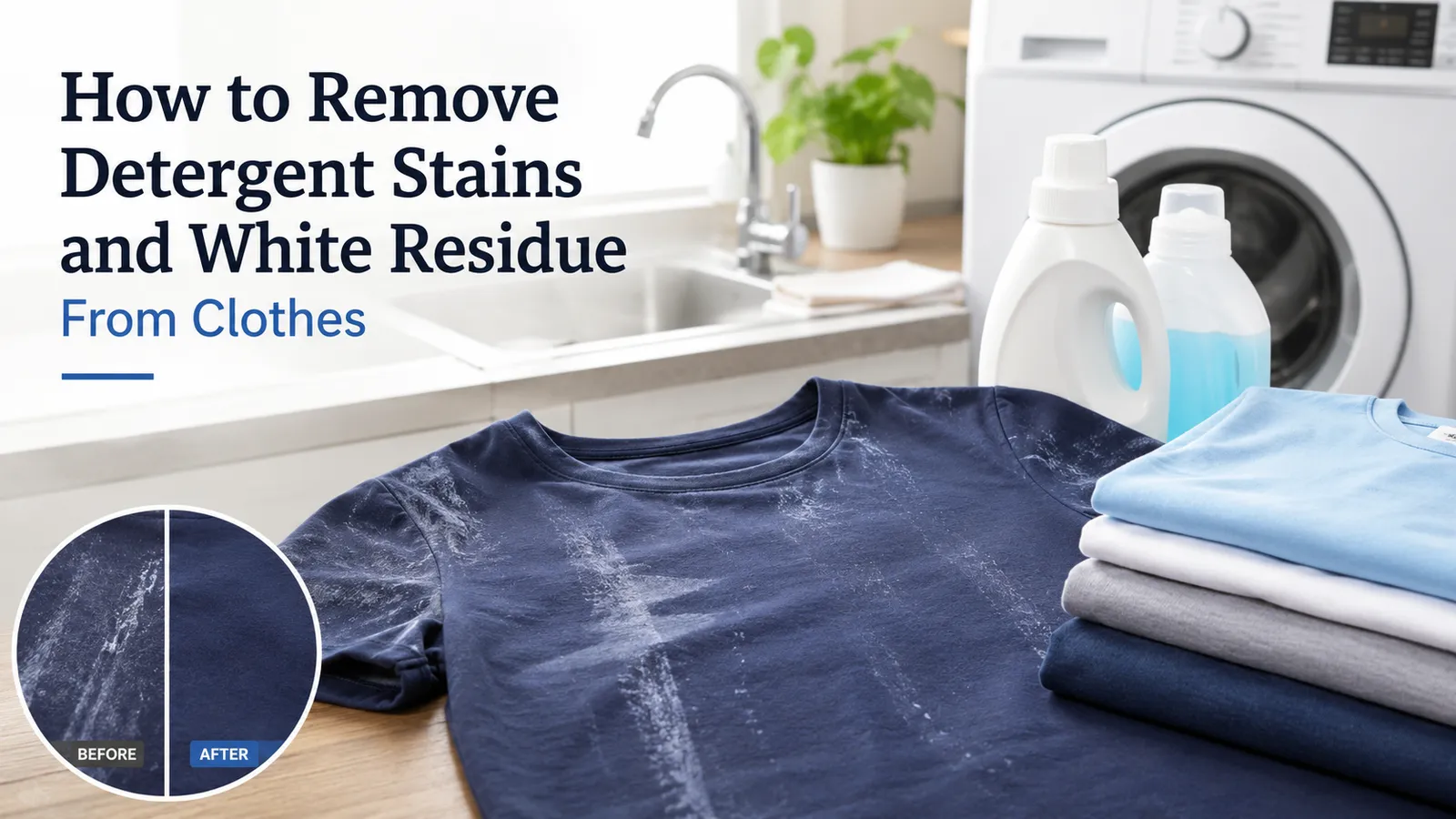
A detergent mark is often product that did not dissolve, distribute, or rinse away properly. On dark clothes it may appear as white powder, chalky streaks, or pale lines. Liquid detergent can leave blue, clear, glossy, or stiff patches, while a partly dissolved laundry pod may create a sticky or concentrated mark.
Not every white mark is detergent. Lint sits on the surface and brushes away. Deodorant is usually concentrated around the underarm. Fabric softener may leave an oily translucent spot. Hard-water minerals can create a more widespread chalky film. Correct identification prevents unnecessary treatment and fabric damage.
Too much detergent
Excess detergent may create more suds and product than the washer can rinse away, particularly in a small load or high-efficiency machine.
The washer was overloaded
A packed drum restricts water flow and prevents garments from opening fully during the rinse, leaving detergent inside folds and against the drum.
Powder detergent did not dissolve
Powder can remain as white clumps when water conditions, product placement, detergent dose, or cycle settings do not allow it to dissolve and distribute.
The wrong detergent was used
A high-efficiency machine normally requires low-sudsing HE detergent. Using an incompatible product can create excess foam and poor rinsing.
Detergent was poured directly onto dry fabric
Concentrated liquid or powder can sit against one garment before enough water enters the machine, creating a localized mark.
A laundry pod was trapped in the load
A single-dose pod may fail to dissolve properly when it is placed incorrectly, trapped inside clothing, used in an overloaded washer, or exposed to unsuitable conditions.
The rinse was insufficient
A very full load, wrong cycle, drainage issue, excessive suds, or low water movement can leave detergent behind after the final rinse.
The mark is another laundry product
Fabric softener, scent products, bleach splashes, pretreatment, and stain remover can each leave a different type of spot that needs its own method.
Lint or minerals are being mistaken for detergent
Light-colored lint can cling to black fabric, while hard-water minerals may leave a dull film. Neither problem is solved by repeatedly applying detergent to the mark.
Prepare first
What You Will Need
Gather these items before starting.
Clean sink, basin, or bucket
Use a container free from bleach, dye, grease, and previous cleaning residue.
Care-label-safe water
The garment label determines whether cold, lukewarm, warm, or hot water can be used.
Soft laundry brush or white cloth
Useful for gently loosening product without roughening fabric or spreading the mark.
Correct laundry detergent
Use the detergent type required by the washer and measure a reduced, appropriate dose for the rewash.
Optional oxygen-based pretreatment
Use only on compatible washable fabric after a hidden-area test and according to the product directions.
Lint roller or garment brush
Helps confirm whether a white surface mark is lint rather than detergent residue.
Safety and care
Before You Start
Do not place the garment in a tumble dryer until the mark has been identified and removed.
Read the care label before soaking, changing water temperature, or using an oxygen product.
Test colored fabric in a hidden area before applying pretreatment.
Do not pour chlorine bleach directly onto a detergent mark.
Never mix chlorine bleach with vinegar, ammonia, acids, oxygen products, or another cleaner.
Dry-clean-only, wool, silk, acetate, embellished, or highly structured garments may need professional care.
Main method
Step-by-Step Instructions
Follow every step in order for a safer and more reliable result.
Step 1
Identify what kind of mark you are treating
A powder residue usually looks dry, white, chalky, or clumped. Liquid detergent can create blue, clear, glossy, or stiff streaks. Pod residue may feel sticky or concentrated. Fabric softener often looks oily, while bleach damage appears permanently lighter.
Run a clean dry brush or lint roller over the mark. If it lifts easily, the problem may be lint. If a damp white cloth removes a chalky film, detergent or minerals are more likely.
Helpful Tip
Examine the garment in daylight before treating it. Marks can look different under warm indoor lighting.
Step 2
Read the care label and test colorfastness
Check the permitted water temperature, wash cycle, drying method, and bleaching symbols. Use the lowest-risk method for the fabric rather than assuming every washable garment can be soaked in hot water.
Test the planned water and treatment on an inside seam. Stop if dye transfers, the finish changes, or the fabric becomes distorted.
Step 3
Remove loose powder before adding water
Take the garment outside or over a clean basin and gently shake or brush away loose detergent clumps. Removing dry product first prevents it from dissolving into a larger concentrated patch.
Do not scrape delicate fabric with a hard tool. Use fingers, a soft brush, or a clean cloth.
Step 4
Rinse the mark from the back
Hold the affected section with the wrong side facing the water so the flow pushes residue back out of the fibers instead of deeper through them.
Use the warmest water allowed by the care label. Keep the water pressure controlled and avoid stretching knit, delicate, or wet heavy fabric.
Step 5
Soak the garment when the fabric allows it
Place the item in clean care-label-safe water and move it gently so trapped detergent can disperse. Do not add more detergent at this stage.
Allow a short soak, inspect the mark, and replace cloudy or heavily sudsy water. Avoid long soaking on unstable dyes, wool, silk, embellished garments, or pieces with glued construction.
Step 6
Treat any remaining streak according to its type
For remaining ordinary detergent residue, gently work clean water through the area. For a compatible washable white or colorfast garment, a label-approved oxygen pretreatment may help with discoloration left by concentrated product.
For an oily fabric-softener spot, apply a small amount of compatible liquid detergent as a pretreatment and follow its contact-time instructions. Do not use the same method on suspected bleach damage or color loss.
Step 7
Rewash in a smaller load
Place the garment in a load with enough space for movement. Use the correct detergent type and measure only the amount required for the load, washer, soil level, and product concentration.
Follow the washer instructions for liquid, powder, or single-dose products. Do not place detergent directly on top of dry clothing unless the appliance and product directions explicitly say to do so.
Step 8
Use an additional rinse when appropriate
Select an extra-rinse option when the washer and garment allow it, particularly after excessive detergent or visible suds. Confirm that the machine drains fully and does not leave standing water.
After the final rinse, the fabric should not feel slippery, heavily coated, or unusually stiff with product.
Step 9
Air-dry, inspect, and prevent another mark
Air-dry the garment in a suitable place and inspect it under good light before using a dryer. If the mark remains, reassess whether it is lint, mineral film, fabric softener, dye loss, deodorant, or another stain.
Prevent recurrence by measuring detergent, using the correct washer type, placing pods as directed, avoiding overloads, cleaning the dispenser, and selecting a cycle with adequate rinsing.
Choose the right method
Instructions by Material or Surface
Use the instructions that match your item.
Black and dark-colored clothes
Best for: White streaks or chalky residue visible on dark fabric
Brush away loose powder, rinse the garment, and rewash it inside out with other dark items. Use the correct small detergent dose and an extra rinse if appropriate.
Inspect for light lint before treating. A lint roller may solve a surface problem that water and detergent will not.
Do not use chlorine bleach or an untested whitening product on dark fabric.
White cotton and durable light fabric
Best for: Detergent discoloration on label-safe washable whites
Rinse thoroughly and soak at the care-label-safe temperature. A compatible oxygen-based pretreatment can be used according to its label after a hidden-area test.
Do not assume every white garment is bleach-safe. Elastic, stitching, prints, coatings, and blended fibers may react differently.
Polyester and synthetic fabric
Best for: Liquid streaks or coated areas on activewear and blends
Use controlled lukewarm or cold water according to the label and avoid aggressive heat. Rinse thoroughly and rewash in a smaller load.
Avoid adding fabric softener when the garment has a moisture-managing finish unless the manufacturer permits it.
Wool and silk
Best for: Residue on delicate protein-based fibers
Use only a fiber-specific detergent and the care-label washing method. Gently rinse without twisting, long soaking, temperature shock, or strong agitation.
Seek professional advice for structured, lined, valuable, or dry-clean-only pieces.
Do not use ordinary enzyme pretreatment unless it is specifically labeled safe for wool or silk.
Baby clothes and sensitive-skin laundry
Best for: Visible residue on compatible washable items
Rinse and rewash with a properly measured fragrance-free detergent when appropriate. Use an extra rinse if recommended by the washer and garment instructions.
Persistent rash or skin irritation requires medical advice; changing laundry products alone may not identify the cause.
More options
Alternative Methods
Use these options only when they suit the material.
Run a water-only rinse
Best for: A clean garment with light visible detergent residue
When the item is otherwise clean, an additional rinse without detergent may remove the coating. Use the correct temperature and cycle for the fabric.
Air-dry and inspect before repeating treatment.
Use label-approved oxygen pretreatment
Best for: Compatible washable white or colorfast clothes with remaining discoloration
Patch-test, follow the exact dilution and contact time, and rinse thoroughly. Do not combine the oxygen product with chlorine bleach or another cleaner.
Clean the detergent dispenser and washer
Best for: Residue appearing repeatedly across several loads
Remove and clean the dispenser only as directed by the appliance manual. Inspect the drum, filter, water supply, drainage, and cleaning-cycle requirements.
Repeated marks across different garments often indicate a dosing, loading, water, or appliance issue rather than a single stained item.
Protect your item
Common Mistakes to Avoid
Putting a marked garment in the dryer before identifying the residue.
Adding more detergent directly onto a detergent stain.
Using a full detergent cap or scoop without checking concentration and load size.
Packing the washing machine too tightly for effective rinsing.
Using non-HE detergent in a high-efficiency washer.
Placing a laundry pod on top of clothing when its directions require it to go into the empty drum first.
Assuming lint, deodorant, bleach damage, mineral film, and fabric softener are all detergent residue.
Using chlorine bleach on dark clothes or mixing it with another cleaner.
Ignoring repeated drainage, dispenser, or water-supply problems.
Optional tools
Helpful Products for This Fix
These product types are optional, not mandatory.
Measuring cap or detergent dosing tool
Best for: Preventing detergent overuse
Accurate measurement is more reliable than pouring detergent by eye, especially with concentrated formulas.
HE laundry detergent
Best for: High-efficiency washers
A low-sudsing HE formula is designed for the lower-water washing and rinsing conditions of compatible machines.
Color-safe oxygen pretreatment
Best for: Compatible washable fabric with remaining discoloration
A properly labeled oxygen product offers clear dilution and contact instructions without relying on improvised mixtures.
Common questions
Frequently Asked Questions
Why is there white residue on my black clothes?
Common causes include undissolved powder detergent, too much detergent, an overloaded washer, insufficient rinsing, lint, or mineral deposits. Brush the surface first, rinse and rewash the garment, then correct the detergent dose and load size.
Can detergent permanently stain clothes?
Most ordinary detergent residue can be removed by rinsing, soaking, and rewashing. However, concentrated products containing dye, bleach, brightener, or another additive may cause discoloration on some fabrics, especially when left to dry.
Should I wash detergent stains in hot or cold water?
Use the warmest water allowed by the garment care label. Warm water may help dissolve some residue, but hot water can damage dark colors, delicate fibers, elastic, prints, or finishes.
Can I put detergent-stained clothes in the dryer?
Air-dry and inspect first. The mark may not be detergent, and dryer heat can make some oily stains or discoloration harder to correct.
Why does powder detergent leave white clumps?
Powder may remain when too much is used, the load is overloaded, water conditions limit dissolution, the product is placed incorrectly, or the cycle does not provide enough movement and rinsing.
Why did a laundry pod leave a sticky mark?
The pod may have been trapped inside clothing, placed incorrectly, used in an overloaded load, or exposed to conditions that prevented complete dissolution. Rinse and soak the garment, then follow the pod and washer placement instructions.
Is white residue always caused by detergent?
No. It may be lint, deodorant, fabric softener, mineral buildup, dried pretreatment, or permanent dye loss. Identify whether the mark brushes away, feels oily, moves with water, or remains permanently lighter before choosing a treatment.
Was This Guide Helpful?
Your feedback helps us improve future EverydayFixes guides.
Keep solving
Related Guides

Why Do Clothes Smell After Washing? 9 Causes and Fixes
Find out why clothes smell musty or sour after washing and fix detergent buildup, washer residue, trapped body oils, overloading, and slow drying.

How to Keep Black Clothes From Fading in the Wash
Keep black clothes darker for longer with correct sorting, cold-water washing, detergent dosing, lower friction, gentle drying, and residue control.