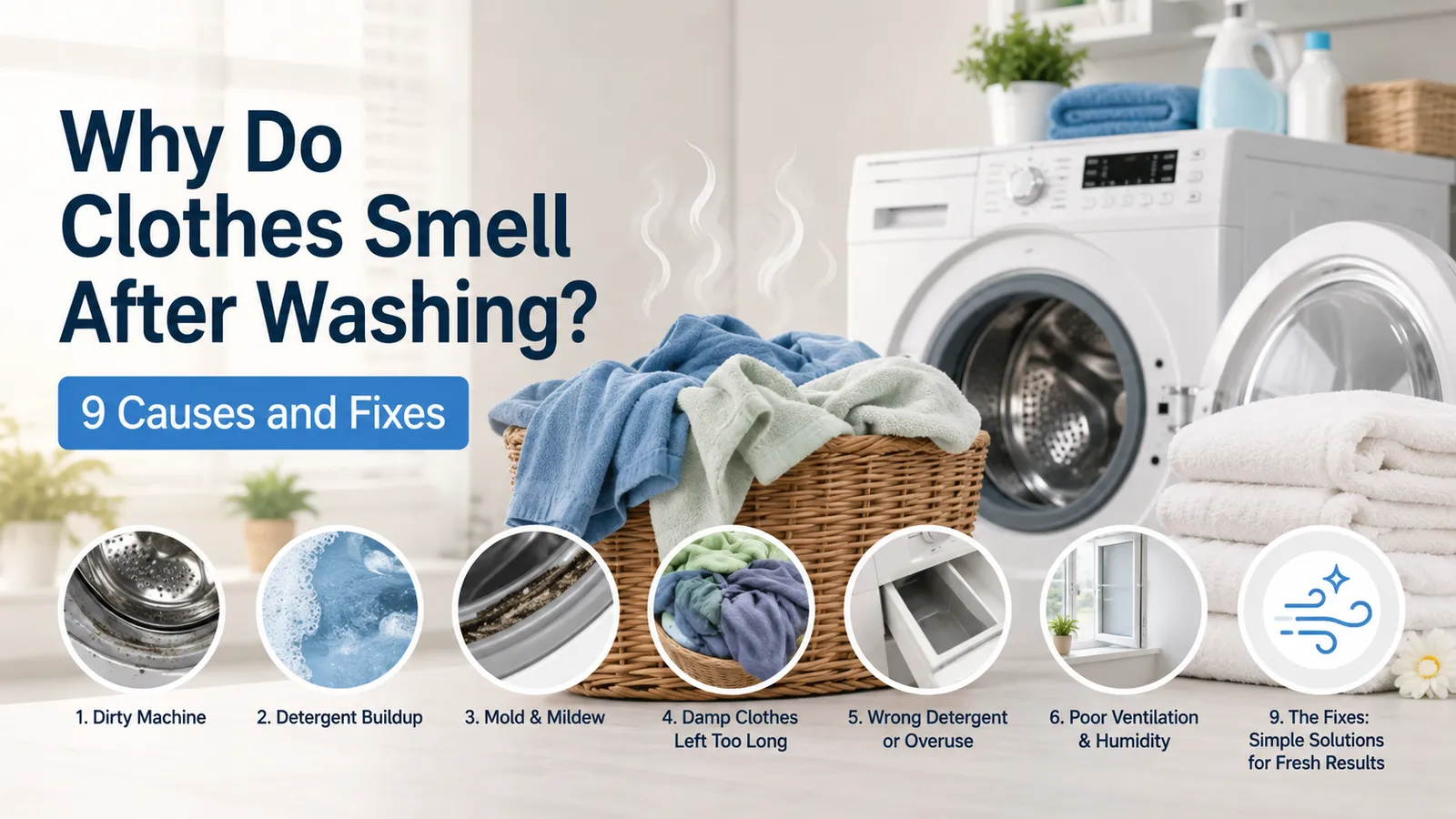
Why Do Clothes Smell After Washing? 9 Causes and Fixes
Find out why clothes smell musty or sour after washing and fix detergent buildup, washer residue, trapped body oils, overloading, and slow drying.
Written by
EverydayFixes Editorial Team
In This Guide
Fast Solution
Quick Answer
Clothes usually smell after washing because the load was overloaded, the detergent dose was wrong, body oils remained in the fabric, wet laundry sat inside the washer, the machine needs cleaning, or the clothes dried too slowly. Start by identifying whether the odor is musty, sour, sweaty, or drain-like instead of covering it with fragrance.
Clean the washer according to its manual, rewash the affected clothes in a smaller load with the correct detergent dose, choose a cycle suited to the fabric and soil level, and dry everything completely as soon as the cycle ends. If the odor resembles sewage, burning, gas, or an electrical fault, stop using the appliance and arrange professional inspection.
Never mix chlorine bleach with ammonia, vinegar, acids, or another cleaner. Follow the washer manual, garment care labels, and product directions before using a cleaning cycle, sanitizer, bleach, oxygen product, or laundry additive.
Time Required
30–60 minutes plus drying
Difficulty
Medium
Best For
Musty, sour, sweaty, stale, or damp-smelling laundry
Important
Adding more fragrance or detergent before finding the actual cause
Understand the issue
Why Freshly Washed Clothes Can Still Smell Bad
A completed wash cycle does not always mean that sweat, body oils, detergent, and odor-causing buildup have been removed. Cleaning depends on several things working together: enough water movement, the right load size, a suitable cycle, the correct detergent dose, effective rinsing, a clean washer, and complete drying.
The type and timing of the smell offer useful clues. Clothes that smell fresh when wet but sour after drying may still contain body oils or detergent residue. A musty smell often points to damp laundry, slow drying, or washer buildup. A drain-like odor may indicate an appliance or plumbing issue rather than a fabric-care problem.
1. Wet clothes stayed inside the washer too long
A closed washer remains warm and humid after the cycle. When damp clothes sit inside it, they can develop a musty or stale smell that remains even after drying.
2. The washer was overloaded
Clothes need room to move through the wash and rinse water. A tightly packed load limits circulation, prevents detergent from reaching every surface, and can trap soil and rinse water inside folded fabric.
3. Too much detergent was used
Extra detergent does not always produce cleaner clothes. Excess suds and product residue can hold body oils and soil against fabric, leave the load difficult to rinse, and contribute to a sour or coated smell.
4. Too little detergent was used for the soil level
A lightly soiled everyday load and heavily sweated workwear do not always need the same dose. Too little detergent may fail to suspend and remove oils, especially from collars, underarms, socks, towels, and activewear.
5. The wrong detergent or cycle was selected
High-efficiency washers require compatible low-sudsing detergent. A very short, delicate, or low-agitation cycle may also be insufficient for a heavily soiled load, while an unnecessarily harsh cycle may damage delicate fabrics.
6. Body oils remain trapped in synthetic fabric
Polyester, nylon, and stretch activewear can hold onto oily soil around underarms, waistbands, socks, and close-fitting areas. The garment may smell clean while wet, then release odor again as it warms during wear or drying.
7. The washing machine needs cleaning
Detergent dispensers, door seals, filters, the drum, and hidden damp areas can collect lint, detergent, fabric softener, hair, and soil. Odor from this buildup can transfer back to otherwise clean laundry.
8. Clothes dried too slowly or incompletely
Thick towels, waistbands, pockets, padded items, and tightly packed drying racks can remain damp inside after the surface feels dry. Slow drying gives musty odor more time to develop.
9. The washer has a drainage or mechanical problem
A kinked or blocked drain hose, poor drainage, standing water, or an improperly installed hose can leave dirty water behind. Sewage-like, burning, electrical, or unusual mechanical smells require appliance troubleshooting rather than repeated rewashing.
Prepare first
What You Will Need
Gather these items before starting.
Correct laundry detergent
Use a detergent suitable for the washer type and fabric. Follow the detergent label, washer instructions, load size, water hardness, and soil level rather than guessing the dose.
Soft laundry brush or clean cloth
Useful for gently pretreating odor-prone areas such as underarms, collars, sock soles, and waistbands without scrubbing the entire garment.
Washer-cleaning product recommended by the manufacturer
Use only a product or cleaning method approved in the appliance manual. Different washers have different cleaning-cycle requirements.
Drying rack, clothesline, or dryer
Choose a drying method permitted by the care label and provide enough space for air to reach thick seams, pockets, and folded areas.
Optional enzyme-containing detergent
A suitable enzyme detergent can help with body-based soil on compatible washable fabrics. Check restrictions for wool, silk, and other protein-based fibers.
Optional laundry sanitizer or oxygen product
Use only when permitted by the garment label, washer manual, and product directions. It should not replace proper washing, rinsing, and drying.
Safety and care
Before You Start
Read every garment care label before increasing water temperature, cycle strength, soaking time, or chemical treatment.
Never mix chlorine bleach with ammonia, vinegar, acids, or another cleaning product.
Do not use an enzyme treatment on wool, silk, or another protein-based fiber unless the product specifically says it is safe.
Do not combine several laundry additives in the same treatment unless their labels explicitly permit it.
Stop using the washer if you notice a burning smell, electrical odor, smoke, leaking water, repeated drainage failure, or unusual mechanical noise.
Avoid wearing clothes that remain damp or have visible mold-like growth. Valuable or delicate items may require professional care.
Main method
Step-by-Step Instructions
Follow every step in order for a safer and more reliable result.
Step 1
Identify the type and timing of the smell
Smell the clothes when they leave the washer, halfway through drying, and after they are fully dry. Note whether the odor is musty, sour, sweaty, detergent-like, drain-like, or chemical.
Check whether the whole load smells or only certain garments. A single synthetic shirt usually points to fabric buildup, while every load smelling the same may point to detergent, washer maintenance, drainage, or drying conditions.
Helpful Tip
Do not add fragrance yet. Masking the odor makes it harder to tell whether the next wash actually fixed the cause.
Step 2
Remove wet laundry as soon as the cycle ends
Take the load out promptly, shake each item open, and separate pieces that are twisted together. Do not leave damp laundry sitting in a closed washer or packed basket.
If you cannot rewash immediately, spread the garments out to dry instead of leaving them in a wet pile. Rewash them later when you have enough time to complete both washing and drying.
Step 3
Check the load size and fabric mix
The drum should not be packed so tightly that clothes cannot move. Divide a large load into smaller loads, especially when washing towels, bedding, hoodies, jeans, uniforms, or other absorbent items.
Wash very dirty workwear, oily kitchen textiles, pet bedding, and heavily sweated activewear separately from lightly worn everyday clothes when their care labels allow it.
Step 4
Correct the detergent type and dose
Confirm whether the washer requires high-efficiency detergent. Measure the detergent using the product instructions and adjust for load size, soil level, washer type, and local water conditions.
Do not automatically use a full cap or scoop. Concentrated detergents may require much less product than expected. If clothes feel coated, stiff, slippery, or strongly perfumed after rinsing, excessive product may be part of the problem.
Step 5
Pretreat the areas that actually hold odor
Turn the garment inside out and inspect underarms, collars, waistbands, cuffs, socks, and close-fitting synthetic areas. Apply a small amount of compatible detergent or pretreatment according to its label.
Work it in gently with fingers, a soft brush, or a clean cloth and allow only the recommended contact time. Avoid leaving concentrated product to dry on fabric.
Step 6
Clean the washing machine correctly
Empty the machine and inspect the detergent drawer, door gasket, lid area, drum, accessible filter, and drainage area identified in the owner’s manual. Remove lint and visible product buildup using the approved method.
Run the manufacturer’s cleaning cycle with the recommended washer cleaner or approved product. Do not add clothes or combine the cleaning product with detergent or another chemical.
Helpful Tip
After cleaning, leave the washer door or lid open when safe to do so, allowing the interior to dry between laundry sessions.
Step 7
Rewash using an appropriate cycle
Rewash the affected clothes in a smaller load. Select a cycle suitable for both the fabric and the actual soil level, using the warmest temperature allowed by the care label—not automatically the hottest setting.
Use the correct measured detergent dose. Add an extra rinse when the washer, detergent instructions, and fabric allow it, particularly when previous loads showed heavy suds or residue.
Step 8
Dry the clothes completely and promptly
Move the load to the dryer, rack, or line as soon as the wash finishes. Separate layers, open pockets, unfold cuffs, and give thick items enough space for air movement.
Use the care-label drying temperature and avoid overcrowding the dryer or rack. Check thick seams, waistbands, hoods, pockets, towels, and padded areas before folding or storing.
Step 9
Troubleshoot odor that keeps returning
If only synthetic sportswear smells again during wear, focus on pretreating oily zones, using a compatible detergent, avoiding fabric-softener buildup, and giving each piece enough room in the load.
If all loads smell musty after the washer has been cleaned, inspect drainage and drying conditions. For sewage-like, gas-like, burning, or electrical smells, stop using the machine and contact an appliance technician or qualified plumbing professional.
Choose the right method
Instructions by Material or Surface
Use the instructions that match your item.
Cotton shirts, sheets, and everyday clothing
Best for: General musty or stale odor on washable cotton garments
Pretreat visible sweat or body-soil areas, wash with the correct detergent dose, and choose the warmest care-label-safe temperature.
Dry fully before folding. Closely packed wardrobes can trap moisture, so allow freshly dried cotton to cool before storage.
Printed designs, elastic, trims, and blended fibers may require lower temperatures than plain cotton.
Towels and thick absorbent items
Best for: Towels that smell sour or musty shortly after washing
Wash towels in a load large enough for movement but small enough for thorough rinsing. Measure detergent carefully and avoid excessive fabric softener, which can coat fibers and reduce absorbency.
Dry the thick hems and folded edges completely. Hang used towels open between uses instead of leaving them in a damp pile.
Check colored-towel care labels before using oxygen products, sanitizers, or high temperatures.
Polyester and activewear
Best for: Sweat odor that returns when the garment warms during wear
Turn the garment inside out, pretreat underarms and close-fitting sections, and wash synthetic pieces in a smaller compatible load.
Use a detergent suitable for synthetic performance fabric and avoid excessive fabric softener, which may leave a coating on moisture-managing finishes.
High heat can damage stretch fibers, prints, and technical finishes. Follow the care label.
Dark denim and black clothing
Best for: Dark garments with mild stale odor but no heavy contamination
Turn them inside out and use a color-preserving, care-label-safe cycle. Avoid repeatedly increasing heat or treatment strength because odor control should not require unnecessary dye loss.
If the garment has white streaks or a coated feel, treat detergent residue before assuming the fabric itself smells.
Wool, silk, and delicate fabrics
Best for: Delicate garments that cannot tolerate standard odor treatments
Follow the care label exactly and use only a detergent designed for the fiber. Air the garment in a suitable place and avoid enzyme detergents, aggressive soaking, hot water, and strong agitation unless specifically permitted.
Dry-clean-only items and valuable garments should be discussed with a professional cleaner.
Wool and silk are protein-based fibers and may be damaged by some enzyme products.
More options
Alternative Methods
Use these options only when they suit the material.
Run a rinse cycle for lightly coated clothes
Best for: A clean load that smells strongly of detergent or feels slippery
When the problem appears to be excess detergent rather than remaining body soil, an additional rinse may be enough. Use no extra detergent and follow the garment and washer instructions.
Dry and inspect the items before deciding whether a complete rewash is needed.
Use a label-approved oxygen laundry product
Best for: Compatible washable clothes with persistent organic odor
Use an oxygen-based laundry booster or pretreatment only when the garment label and product directions allow it. Patch-test colored fabric and follow the exact dose and contact time.
Do not mix it with chlorine bleach or another treatment.
Arrange appliance or drainage service
Best for: Standing water, repeated drain failure, sewage smell, or unusual machine behavior
A technician or qualified plumbing professional should inspect problems that remain after normal filter, hose, and cleaning checks permitted by the manual.
Repeatedly washing clothes in a machine that does not drain correctly will not solve the source.
Protect your item
Common Mistakes to Avoid
Leaving wet laundry inside the washer after the cycle ends.
Packing the drum so tightly that clothes cannot move and rinse.
Using extra detergent because the clothes smell bad.
Using non-HE detergent in a washer that requires HE detergent.
Covering odor with fabric softener, scent beads, or perfume without cleaning the source.
Ignoring underarm, collar, waistband, sock, and activewear buildup.
Folding towels, hoodies, waistbands, or padded items while they are still damp inside.
Combining bleach, vinegar, ammonia, sanitizer, detergent, and other products without label approval.
Continuing to use a washer with sewage, gas, burning, or electrical odors.
Optional tools
Helpful Products for This Fix
These product types are optional, not mandatory.
Properly dosed HE laundry detergent
Best for: High-efficiency washing machines
Low-sudsing detergent used at the correct dose improves washing and rinsing without creating unnecessary foam buildup.
Enzyme-containing laundry detergent
Best for: Compatible washable fabrics with sweat and body-oil buildup
Suitable enzymes can help break down selected body-based soils that ordinary rinsing may leave behind.
Manufacturer-approved washer cleaner
Best for: Routine empty-machine maintenance
An approved cleaner is designed for the washer’s cleaning cycle and reduces the risk of unsafe improvised chemical combinations.
Common questions
Frequently Asked Questions
Why do my clothes smell sour after washing?
A sour smell commonly points to detergent residue, trapped body oils, an overloaded load, wet laundry sitting too long, or incomplete drying. Rewash a smaller load using the correct detergent dose, clean the washer, and dry everything promptly.
Why do clothes smell fine when wet but bad after drying?
Moisture and fragrance can temporarily hide remaining body oils or washer residue. As the fabric dries or warms, trapped odor becomes noticeable again. Pretreat odor-prone areas and correct the detergent, load size, cycle, and drying method.
Does using more detergent remove bad laundry odor?
Not necessarily. Too much detergent can be difficult to rinse and may trap soil against fabric. Use the amount recommended for the washer, load size, soil level, detergent concentration, and water conditions.
Can I mix baking soda and vinegar in the washing machine?
Do not improvise chemical combinations inside the washer. Baking soda and vinegar react with each other, and appliance manufacturers may restrict where additives can be placed. Use one approved product at a time according to its label and the washer manual.
Why do only my workout clothes smell after washing?
Synthetic activewear can retain oily body soil in underarms, waistbands, and close-fitting sections. Turn the pieces inside out, pretreat those areas, avoid overloading and excessive fabric softener, and use a detergent compatible with performance fabric.
How often should I clean my washing machine?
Follow the interval in the owner’s manual. Many machines provide a cleaning-cycle reminder or recommend regular monthly maintenance, but the exact schedule and product depend on the model and usage.
When does laundry odor indicate a washer problem?
Suspect an appliance or drainage issue when every load has the same odor, water remains in the drum, the machine does not drain properly, or the smell resembles sewage, burning, gas, or an electrical fault. Stop using an unsafe machine and arrange inspection.
Was This Guide Helpful?
Your feedback helps us improve future EverydayFixes guides.
Keep solving
Related Guides
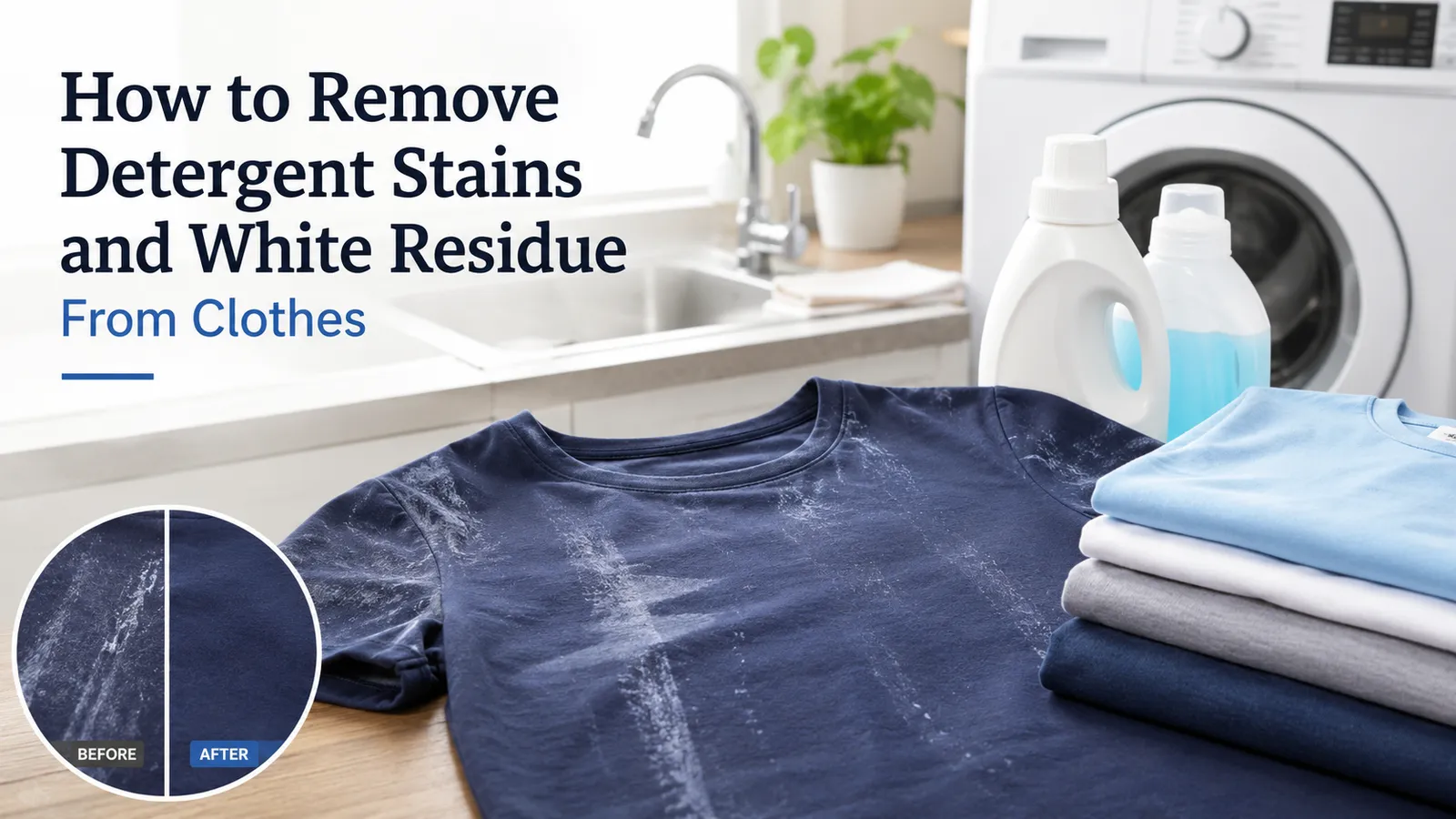
How to Remove Detergent Stains and White Residue From Clothes
Remove liquid detergent streaks, powder clumps, and white residue from dark or light clothes using fabric-safe rinsing, soaking, and rewashing methods.
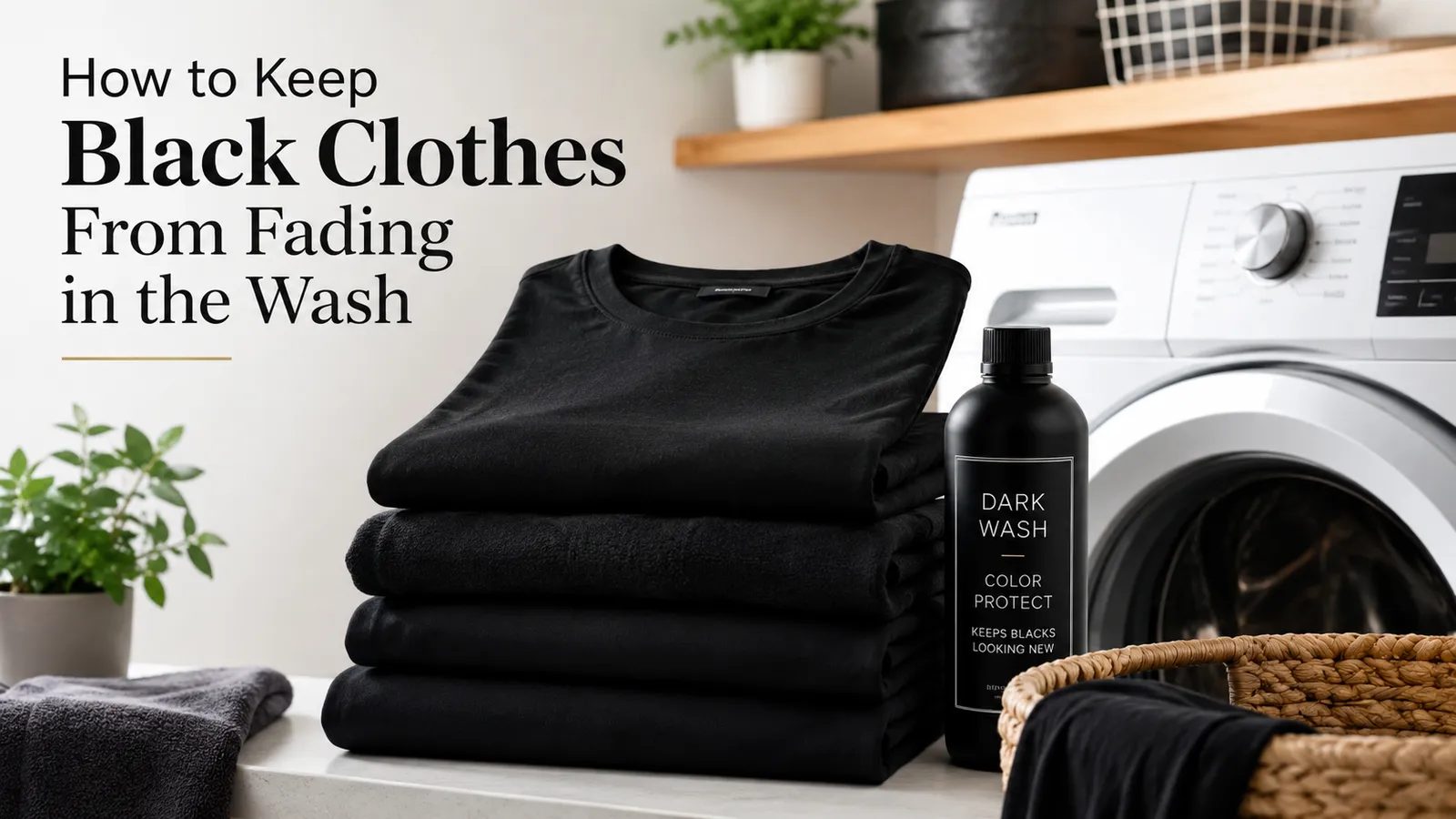
How to Keep Black Clothes From Fading in the Wash
Keep black clothes darker for longer with correct sorting, cold-water washing, detergent dosing, lower friction, gentle drying, and residue control.