How to Get Smell Out of Shoes and Keep It From Coming Back
Remove odor from sneakers, gym shoes, work shoes, and insoles by cleaning the source, drying moisture, and preventing repeat buildup.
Written by
EverydayFixes Editorial Team
In This Guide
Fast Solution
Quick Answer
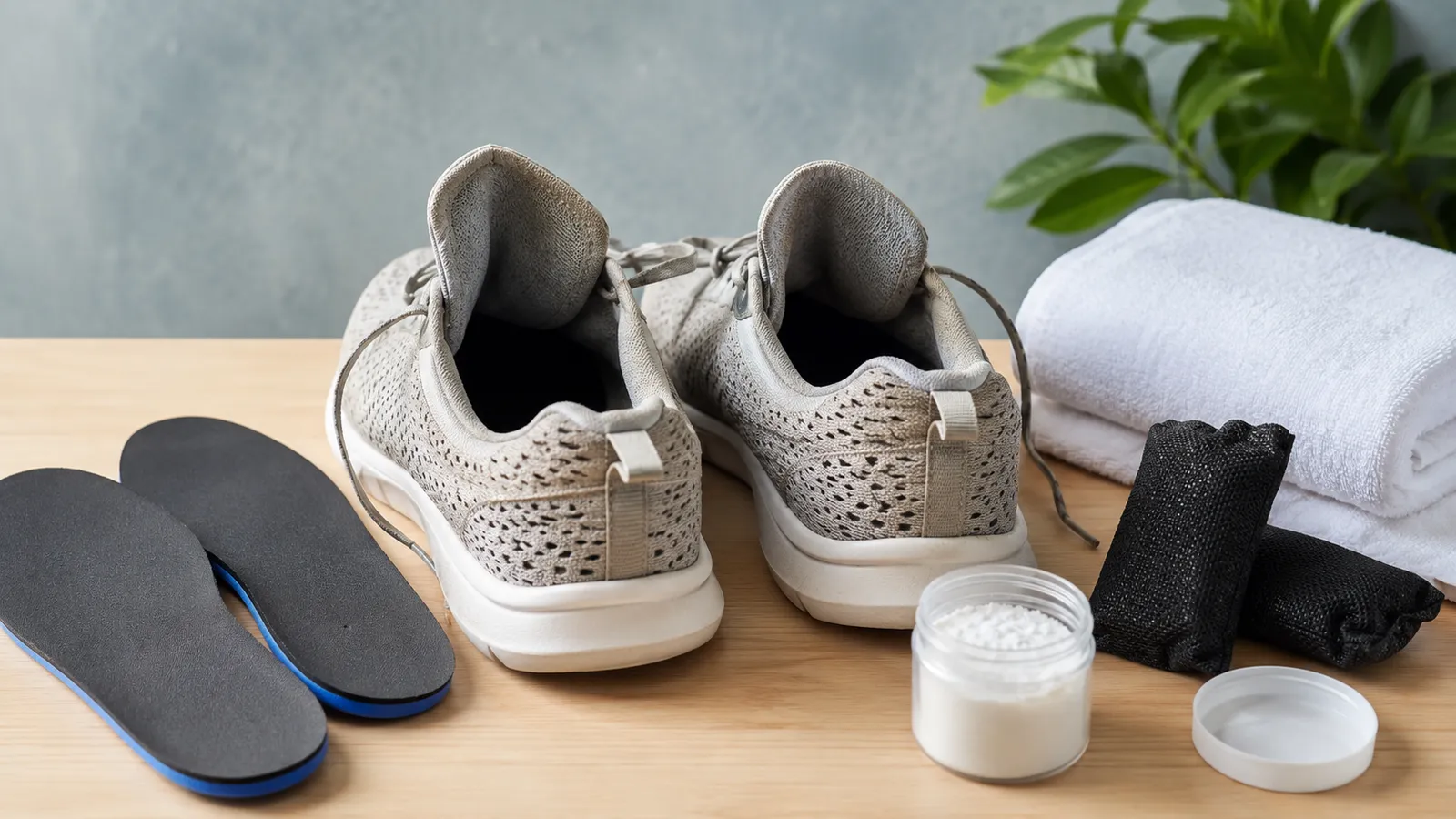
Remove the laces and removable insoles, open the tongue, and dry the shoes completely before trying to deodorize them. Clean washable insoles and linings with a small amount of mild detergent, wipe away residue, and air-dry every part separately.
Once the shoes are fully dry, use a footwear-safe odor powder, activated-charcoal insert, or a light manufacturer-approved baking-soda treatment. Prevent the smell from returning by rotating pairs, wearing clean moisture-managing socks, removing shoes from gym bags, and drying them after every use.
Shoe products are not skin treatments. If odor continues with itching, peeling, redness, cracks, pain, drainage, or a spreading rash, seek medical advice instead of repeatedly applying cleaners or powders.
Time Required
20–30 minutes plus 12–24 hours drying
Difficulty
Easy
Best For
Sneakers, gym shoes, work shoes, and removable insoles
Important
Masking odor while the shoes are still damp
Understand the issue
Why Shoes Smell Even After They Look Clean
Shoe odor usually develops when sweat and moisture remain inside a warm, enclosed shoe. Bacteria that live on skin and inside footwear interact with sweat and skin debris, creating odor. Thick foam, padded collars, dirty insoles, non-breathable storage, and wearing the same pair before it dries can keep the cycle going.
A deodorizer can reduce smell temporarily, but it will not solve a damp lining or saturated insole. The most reliable routine is source control: inspect, clean what is washable, dry every layer completely, replace worn odor-holding parts when necessary, and change the daily habits that keep moisture trapped.
Sweat and bacteria
Sweat itself is not the whole smell. Bacteria on feet and in shoes break down sweat and skin material, producing odor-causing byproducts.
Shoes that never fully dry
Foam, padding, and enclosed toe boxes may remain damp long after the outside feels dry. Wearing the pair again restarts moisture buildup.
Odor trapped in removable insoles
Insoles sit directly under the foot and absorb repeated sweat, oils, and skin debris. They can remain the main odor source even after the upper is wiped.
Closed storage after exercise
Gym bags, lockers, plastic boxes, and tightly closed cabinets limit airflow and keep heat and moisture around the shoe.
Daily wear without rotation
One pair may not have enough time to dry between uses, particularly in humid weather or after long shifts and workouts.
Foot or skin condition
Persistent odor can sometimes occur with excessive sweating, fungal infection, or irritated skin. Cleaning the shoe alone will not treat a medical problem.
Prepare first
What You Will Need
Gather these items before starting.
Mild liquid detergent or footwear cleaner
Use a small diluted amount on washable fabric lining or insoles according to their care instructions.
White microfiber cloth
Useful for controlled interior wiping and removing soap residue.
Plain white paper or clean absorbent towels
Help lift moisture and keep shape during air-drying.
Fan or well-ventilated drying space
Room-temperature airflow dries the interior more safely than direct heat.
Footwear-safe deodorizer or activated-charcoal insert
Use only after the shoes are fully dry and follow the product label.
Clean moisture-managing socks
Fresh socks reduce the amount of sweat and skin debris transferred into the shoe.
Safety and care
Before You Start
Follow the shoe, insole, and orthotic care instructions before washing or applying powder.
Do not spray perfume over damp shoes; fragrance masks odor without removing moisture or residue.
Avoid household disinfectants, essential oils, chlorine bleach, and strong solvents unless the product is specifically labeled for that footwear material.
Never mix cleaning products, and keep powders or sprays away from eyes, lungs, children, pets, and open flames.
Do not reinstall damp insoles or wear shoes that are still wet inside.
Seek medical advice for persistent odor with itching, peeling, redness, painful cracks, swelling, drainage, or recurrent skin infection.
Main method
Step-by-Step Instructions
Follow every step in order for a safer and more reliable result.
Step 1
Find where the odor is strongest
Smell the upper, toe box, heel lining, laces, and removable insoles separately. Look for damp foam, visible residue, damaged lining, darkened insole areas, or debris trapped under the insole.
If one removable insole smells much stronger than the rest of the shoe, clean or replace that component instead of repeatedly saturating the entire upper.
Step 2
Open the shoe and remove washable parts
Remove the laces and any insole designed to come out. Pull the tongue forward and loosen the opening so air reaches the toe box and heel.
Do not force out glued insoles or custom orthotics. Follow the provider or manufacturer instructions for those parts.
Step 3
Dry wet shoes before deodorizing
Blot visible moisture with a clean towel, stuff the shoe loosely with plain white paper, and place it in moving room-temperature air. Replace damp paper and dry removable insoles outside the shoe.
A fan can improve airflow, but avoid radiators, tumble dryers, hair dryers, and intense sun because heat can affect foam, glue, rubber, leather, and shape.
Step 4
Clean removable insoles according to the label
If the care instructions allow hand washing, use a small amount of diluted mild detergent and gently wipe or brush the surface. Rinse or wipe repeatedly until no soap remains.
Blot with a towel and air-dry flat. Reinstall the insoles only when both sides and the foam core are completely dry.
Helpful Tip
If the insole is cracked, permanently compressed, peeling, or still smells after careful cleaning and drying, replacement may be more effective than stronger chemicals.
Step 5
Wipe or hand-clean the interior
For washable fabric lining, use a cloth that is damp rather than dripping. Wipe with weak cleaning solution, then wipe again with plain water to remove residue.
Keep moisture minimal around leather, suede, memory foam, glued seams, electronics, and custom cushioning. Clean each material according to its own care method.
Step 6
Air-dry every layer completely
Dry the shoes with the tongue open and the insoles removed. Aim airflow across the opening and allow extra time for thick padding and the toe box.
The outside can feel dry while internal foam remains damp. Wait at least overnight when necessary and check the deepest lining before reassembly.
Step 7
Deodorize only after the shoes are dry
Apply a footwear-safe odor powder exactly as labeled, or place activated-charcoal inserts inside overnight. Remove excess powder before wearing.
When the manufacturer permits it, a light layer of baking soda may be left in a dry shoe overnight and tapped or vacuumed out thoroughly. Treat it as an odor absorber, not a substitute for cleaning wet or dirty lining.
Step 8
Replace parts that keep holding odor
Old insoles and damaged lining can retain odor after several cleaning cycles. Replace removable insoles with a compatible size and type when cleaning no longer produces a useful result.
If the upper itself is deteriorating, mold-like growth is visible, or the smell returns immediately after complete drying, professional cleaning or replacement may be the practical option.
Step 9
Use a prevention routine after every wear
Remove shoes from bags, loosen the laces, open the tongue, and let the pair air out as soon as possible. Rotate between pairs so each one has time to dry.
Wear clean socks suited to the activity, keep feet clean and dry, and wash or replace socks after workouts and long shifts. Store shoes in a ventilated place rather than a sealed plastic container.
Choose the right method
Instructions by Material or Surface
Use the instructions that match your item.
Washable mesh and fabric sneakers
Best for: Running, training, and casual textile shoes
Use controlled hand cleaning on the lining and removable insoles. Avoid saturating thick foam, and air-dry with the tongue open and insoles removed.
Do not assume the washing machine is safe; follow the exact shoe care instructions.
Leather shoes
Best for: Work shoes, leather sneakers, and finished leather uppers
Keep water minimal, wipe the interior rather than soaking it, and use a leather-safe exterior product when needed. Dry slowly at room temperature and condition only when the manufacturer recommends it.
Heavy wetting and heat can stiffen leather and affect glue.
Suede or nubuck shoes
Best for: Textured leather footwear
Focus on removing and drying insoles, airing the shoe, and using a suede-safe interior or odor product. Keep wet detergent and general disinfectant off the exterior nap.
Use the separate suede-cleaning method for visible exterior marks.
Custom orthotics
Best for: Prescription or fitted inserts
Follow the provider instructions. Many orthotics should be wiped with a damp cloth and mild soap rather than soaked, machine washed, or exposed to heat.
Improvised washing can change the fit, support, or adhesive layers.
Sandals and slip-on shoes
Best for: Footbeds directly exposed to skin
Check whether the footbed is textile, foam, cork, leather, suede, or synthetic. Clean only with a product safe for that surface and let the footbed dry fully before wearing.
Cork, suede footbeds, and glued layers can be damaged by soaking.
More options
Alternative Methods
Use these options only when they suit the material.
Activated-charcoal or moisture-absorbing inserts
Best for: Dry shoes between uses
Place the insert in a fully dry shoe and follow its replacement or reactivation instructions. Inserts can help manage remaining odor but do not replace cleaning dirty insoles or drying damp foam.
Manufacturer-approved deodorizing spray
Best for: A material and lining listed on the product label
Patch-test, apply the minimum amount, and let the shoe dry before wearing. Avoid using a general room spray, perfume, or disinfectant that is not labeled for footwear contact.
Professional cleaning or shoe replacement
Best for: Mold-like growth, contamination, deteriorating lining, or odor that returns immediately
A professional can assess whether the footwear can be cleaned safely. Replacement may be more practical when foam, lining, or adhesive has broken down and permanently holds moisture or odor.
Protect your item
Common Mistakes to Avoid
Spraying perfume into damp shoes and assuming the source is removed.
Wearing the same pair every day before the lining and insoles dry.
Reinstalling damp insoles.
Leaving sweaty shoes closed inside a gym bag, locker, or plastic box.
Using a tumble dryer, radiator, hair dryer, or harsh direct sun.
Applying household disinfectant, bleach, solvent, or essential oil without material-safe instructions.
Using shoe deodorizer on irritated skin or treating a skin condition with footwear products.
Keeping old, cracked, compressed insoles that remain the main odor source.
Optional tools
Helpful Products for This Fix
These product types are optional, not mandatory.
Footwear-safe odor powder
Best for: Dry shoes between uses
A labeled product provides dosing, contact, and cleanup instructions for footwear rather than relying on heavy fragrance.
Activated-charcoal shoe inserts
Best for: Overnight odor and moisture management
Reusable inserts can help absorb remaining odor in dry shoes without coating the lining with spray.
Moisture-managing socks
Best for: Exercise, warm weather, and long work shifts
Clean socks that manage moisture reduce how much sweat remains against the foot and enters the shoe.
Compatible replacement insoles
Best for: Old insoles that stay odorous after cleaning
Replacing a saturated or deteriorated removable insole can address the main odor reservoir without over-cleaning the whole shoe.
Common questions
Frequently Asked Questions
Does baking soda remove smell from shoes?
Baking soda can absorb or reduce some odor in fully dry shoes, but it does not clean sweat residue or fix trapped moisture. Use a light amount only when the manufacturer allows it, leave it overnight, and remove it thoroughly before wearing.
Can I spray vinegar inside smelly shoes?
Some shoe-care guides mention a diluted vinegar spray for selected materials, but vinegar can affect dyes, leather, suede, glue, and finishes. A footwear-labeled deodorizer is more predictable. Patch-test and follow the shoe instructions before using any liquid inside.
Can I put smelly shoes in the freezer?
Freezing is not a reliable substitute for cleaning and drying. It may reduce odor temporarily, but moisture, residue, and odor-causing organisms can remain. Focus on washable parts, complete drying, clean socks, and rotation.
Can I put running shoes in a tumble dryer?
Avoid tumble drying unless the manufacturer explicitly permits it. Heat and tumbling can affect glue, foam, rubber, cushioning, and shape. Air-dry at room temperature with insoles removed.
How long should shoes air out before I wear them again?
Wait until the deepest lining, toe box, and insoles are completely dry. Light shoes may dry overnight, while thick foam or humid conditions may require 24 hours or longer.
Why does the smell return after one wear?
The shoes may still be damp inside, the insole may hold old residue, the same pair may be worn too frequently, or a foot-skin issue may be contributing. Dry and inspect every layer, replace worn insoles, rotate pairs, and seek medical advice if skin symptoms are present.
When should persistent shoe odor be treated as a health issue?
Seek medical advice when odor continues with itching, peeling, redness, cracks, pain, swelling, drainage, or recurrent infection. Shoe cleaning can reduce moisture and residue but cannot diagnose or treat a skin condition.
Was This Guide Helpful?
Your feedback helps us improve future EverydayFixes guides.
Keep solving
Related Guides
How to Clean White Shoes Without Turning Them Yellow
Clean white canvas, mesh, synthetic, and leather shoes without leaving yellow marks, soap residue, or heat damage.
How to Clean Suede Shoes Without Ruining the Texture
Clean suede shoes with a dry-first method for dirt, scuffs, water marks, and small stains without flattening the soft nap.